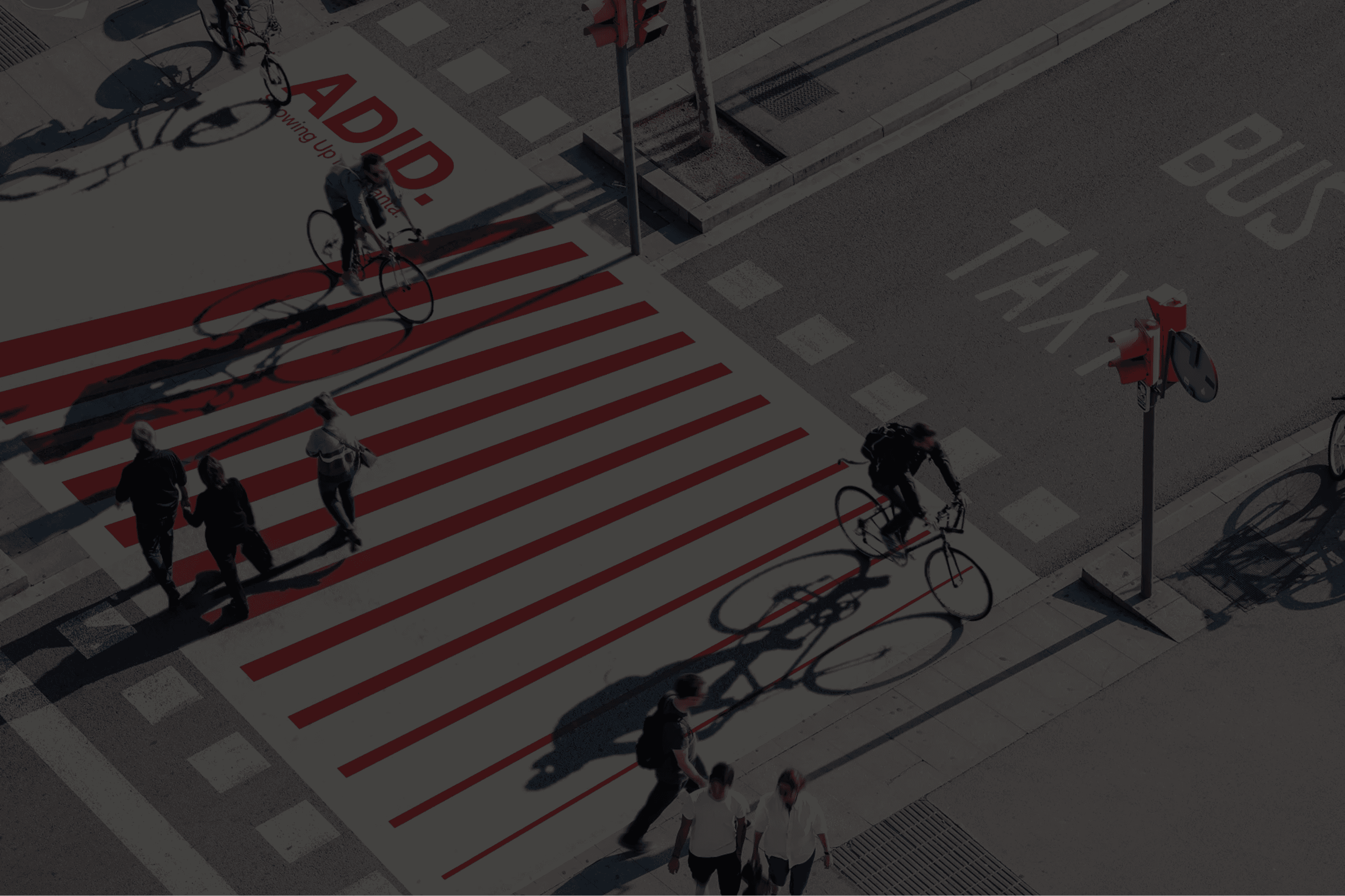
ADID KIOSK
Designing a downtown Atlanta wayfinding kiosk to simplify navigation, improve clarity, and support visitors during the World Cup.
(Year)
2025
(Project)
UX Design
Rethinking
Navigation
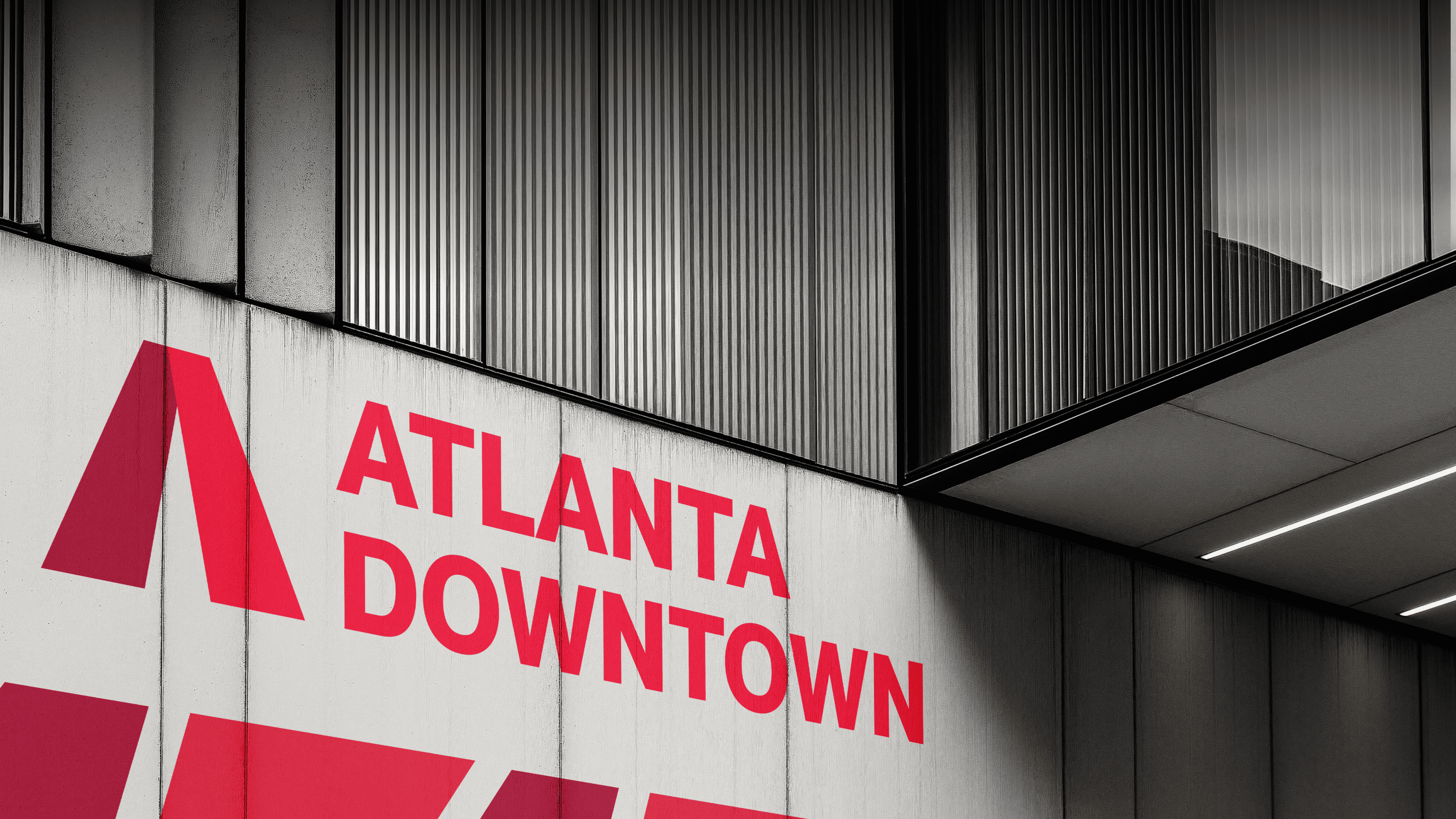
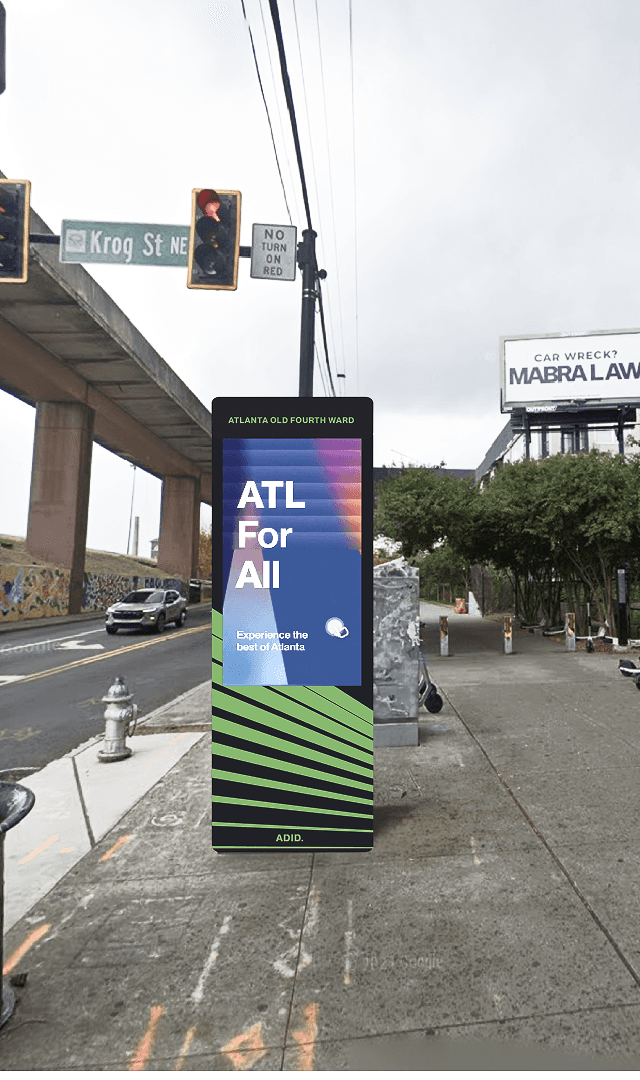
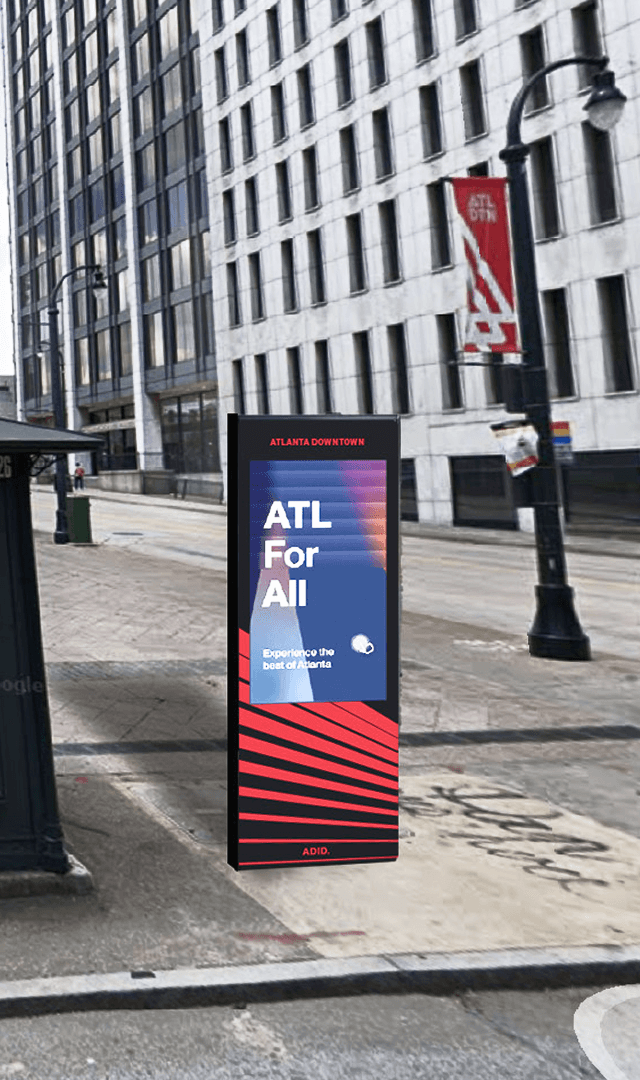
This project focused on designing a wayfinding kiosk for Downtown Atlanta ahead of the 2026 World Cup, aimed at helping visitors navigate the city with clarity and confidence. The system was built to support high-traffic environments and users unfamiliar with the area.
We began by identifying the challenges of navigating a dense urban environment during a large-scale event, where users are often under time pressure and lack familiarity with their surroundings. Our goal was to create a kiosk experience that enables quick decision-making and reduces confusion at every step.
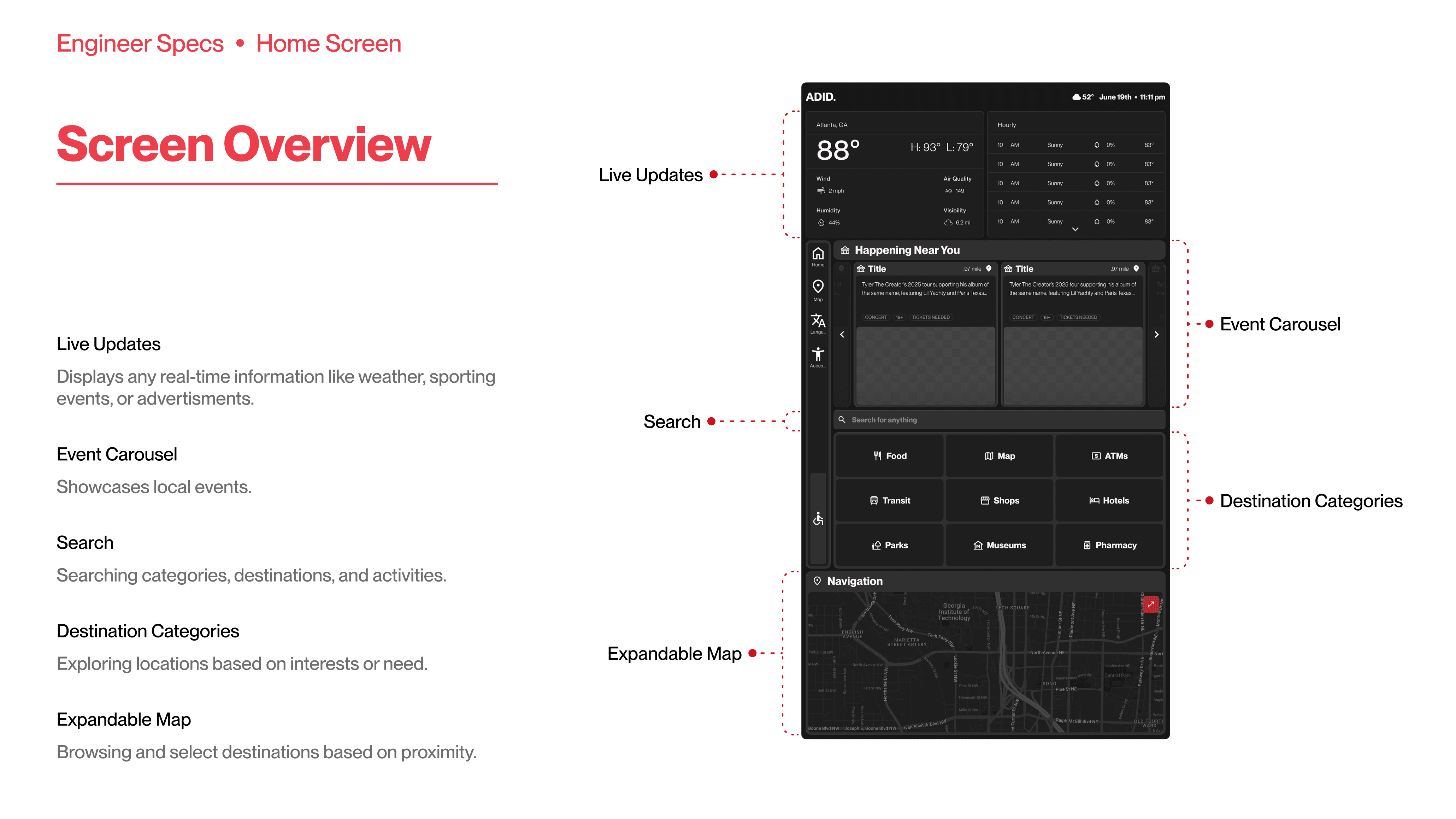
The result was a streamlined interface that prioritizes clarity, speed, and ease of use. Key features included simplified navigation flows, clear visual hierarchy, and intuitive touch interactions designed to guide users toward their destinations with minimal friction.
Our team conducted in-person usability testing using a Figma prototype, observing how users interacted with the system in real time. Insights from testing informed iterations focused on improving readability, reducing cognitive load, and ensuring users could confidently navigate without assistance.
The final design demonstrates how thoughtful wayfinding systems can improve urban navigation, especially in high-pressure, high-volume scenarios like the World Cup.
ADID KIOSK
Designing a downtown Atlanta wayfinding kiosk to simplify navigation, improve clarity, and support visitors during the World Cup.
(Year)
2025
(Project)
UX Design
Rethinking
Navigation
This project focused on designing a wayfinding kiosk for Downtown Atlanta ahead of the 2026 World Cup, aimed at helping visitors navigate the city with clarity and confidence. The system was built to support high-traffic environments and users unfamiliar with the area.
We began by identifying the challenges of navigating a dense urban environment during a large-scale event, where users are often under time pressure and lack familiarity with their surroundings. Our goal was to create a kiosk experience that enables quick decision-making and reduces confusion at every step.
The result was a streamlined interface that prioritizes clarity, speed, and ease of use. Key features included simplified navigation flows, clear visual hierarchy, and intuitive touch interactions designed to guide users toward their destinations with minimal friction.
Our team conducted in-person usability testing using a Figma prototype, observing how users interacted with the system in real time. Insights from testing informed iterations focused on improving readability, reducing cognitive load, and ensuring users could confidently navigate without assistance.
The final design demonstrates how thoughtful wayfinding systems can improve urban navigation, especially in high-pressure, high-volume scenarios like the World Cup.
ADID KIOSK
Designing a downtown Atlanta wayfinding kiosk to simplify navigation, improve clarity, and support visitors during the World Cup.
(Year)
2025
(Project)
UX Design
Rethinking
Navigation
This project focused on designing a wayfinding kiosk for Downtown Atlanta ahead of the 2026 World Cup, aimed at helping visitors navigate the city with clarity and confidence. The system was built to support high-traffic environments and users unfamiliar with the area.
We began by identifying the challenges of navigating a dense urban environment during a large-scale event, where users are often under time pressure and lack familiarity with their surroundings. Our goal was to create a kiosk experience that enables quick decision-making and reduces confusion at every step.
The result was a streamlined interface that prioritizes clarity, speed, and ease of use. Key features included simplified navigation flows, clear visual hierarchy, and intuitive touch interactions designed to guide users toward their destinations with minimal friction.
Our team conducted in-person usability testing using a Figma prototype, observing how users interacted with the system in real time. Insights from testing informed iterations focused on improving readability, reducing cognitive load, and ensuring users could confidently navigate without assistance.
The final design demonstrates how thoughtful wayfinding systems can improve urban navigation, especially in high-pressure, high-volume scenarios like the World Cup.